
Welcoming the Office of the Children's Guardian to Experience Child Safety Learning in Action

August 2026
Ambrose is committed to fostering a strong child-safe culture across all services and values the support and guidance provided by organisations such as the NSW Office of the Children’s Guardian (OCG).

Recently, Ambrose Early Learning St John XXIII, Stanhope Gardens, welcomed Skye from the OCG as part of a review of the Safe Series Educator User Guide. As part of this process, Skye has been visiting selected early learning services to observe how the resources are being implemented in practice and to gather valuable feedback from educators. Ambrose Early Learning was honoured to be one of a small number of services invited to participate in the review.

At St John XXIII, child safety is embedded within their daily Social and Emotional program. Rather than being taught as a standalone topic, child safety concepts are thoughtfully woven throughout everyday practice. Learning experiences are planned across the week to support children’s understanding and ensure every child can actively participate.

Developed each term and shared with families, the program is guided by child development theory, curriculum outcomes, and the Child Safe Standards. This approach ensures learning remains responsive to the needs, interests, and experiences of children while providing regular opportunities to revisit and reinforce important concepts.

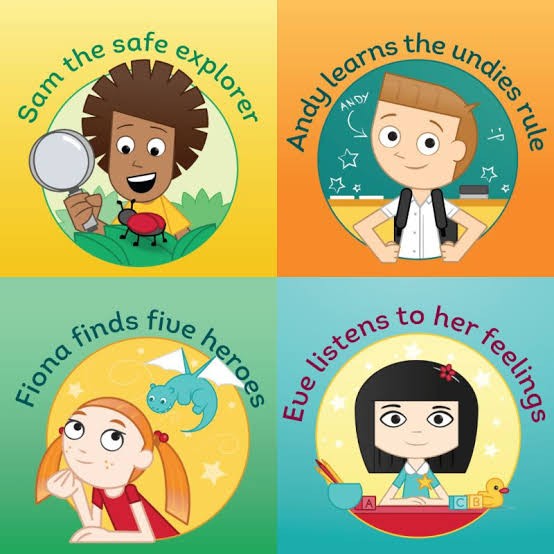
During Skye’s visit, Erin (Educational Leader) and Nicholas (Educator) facilitated a series of learning experiences using Fiona Finds 5 Heroes, a Safe Series resource the children have previously explored throughout the year. The children demonstrated a strong understanding of the content and engaged in thoughtful discussions, reflected on their learning, and shared their ideas with increasing confidence and depth.
Skye observed both educators’ facilitation styles, noting the strengths of their individual approaches and praising the collaborative conversations that followed. These discussions encouraged children to reflect on who their trusted adults and “heroes” are, and how those people may differ depending on a particular situation or need.

Following the observations, Skye provided highly positive feedback on the service’s implementation of the Safe Series resources. She noted the children’s clear understanding of the concepts and commended the effective use of whiteboards and floor books to capture children’s voices, document learning, and reinforce key messages. These tools were also recognised as valuable resources for educator reflection, supporting the assessment of learning outcomes and informing future planning.

Thank you to Skye and the Office of the Children’s Guardian for taking the time to visit the service and acknowledge the work of the St John XXIII educators in fostering child-safe environments and empowering children through education and conversation. As all Ambrose services continue to strengthen their child-safe practices, opportunities such as this reinforce our commitment to creating environments where every child feels safe, respected, and heard.

For more information on Ambrose Child Safe Practices 

Faith, Belonging and Community

Grounded in the Catholic faith and open to all, our learning communities welcome families from all backgrounds, cultures and faith traditions.

Guided by the values of Respect, Encouragement and Care, educators support children to:

  • Develop kindness, empathy and gratitude
  • Build respectful relationships
  • Care for others and the environment
  • Develop confidence and a sense of belonging
  • Recognise and value diversity within the community

Faith and spirituality are experienced in age-appropriate and meaningful ways through:

  • Prayer and reflection
  • Stories, celebrations and traditions
  • Shared values and respectful relationships
  • Participation in school and community events
  • Experiences of care, inclusion and belonging

Educators nurture children’s natural sense of curiosity, wonder and connection to the world around them while supporting them to grow as caring, thoughtful and respectful individuals.

As part of a Catholic community, children experience opportunities to build connections with:

  • Educators and families
  • School and parish communities
  • Cultural and community celebrations
  • Shared events and experiences
  • The wider world around them

Transitioning to Kindergarten

At Ambrose, transition to school is viewed as a gradual and supportive journey where children build confidence, familiarity and a sense of belonging before their first day of school.

Throughout the year, educators intentionally support children to develop:

  • Confidence participating in group learning experiences
  • Listening and communication skills
  • Independence and self-help skills
  • Emotional regulation and resilience
  • Attention, persistence and flexible thinking
  • Positive relationships and social confidence
  • Familiarity with routines and transitions


Families are supported throughout the transition process through:

  • Ongoing communication and transition discussions
  • Parent-teacher interviews and learning updates
  • Transition to School Statements
  • Opportunities to connect with educators and school communities

Social and Emotional Development

At Ambrose, children are part of a connected Catholic school community where relationships, belonging and wellbeing are intentionally nurtured every day.

Grounded in the values of respect, encouragement and care, our nurturing learning environments support children to feel:

  • Safe and supported
  • Confident to participate and try new things
  • Connected to others and their community
  • Valued as capable learners
  • A strong sense of identity and belonging


Social and emotional learning is embedded throughout the day through:

  • Collaborative play experiences
  • Group discussions and reflection
  • Intentional teaching moments
  • Problem solving and conflict resolution
  • Structured routines and expectations
  • Prayer, wellbeing and relationship building


Through intentional play-based learning, structured routines and shared experiences, children develop:

  • Confidence and independence
  • Positive relationships and friendships
  • Emotional awareness and self-regulation
  • Resilience
  • Communication and collaboration skills
  • Respect, empathy and kindness

Mathematical Thinking and Inquiry

At Ambrose, mathematical thinking is developed through intentional play-based learning, inquiry, investigation and hands-on learning experiences that encourage children to explore, question and problem solve.

The Ambrose Foundations program supports children’s learning about mathematical concepts and applying them in their play and inquiries including STEAM experiences, construction, investigation and collaborative learning.

Children become familiar with:

  • Patterns and predictions
  • Shapes and spatial thinking
  • Measurement and data
  • Quantity and counting


Teachers intentionally plan for children’s Mathematical Inquiry and thinking, supporting children to develop:

  • Early number awareness
  • Problem solving and critical thinking
  • Pattern recognition
  • Spatial awareness
  • Reasoning and prediction skills
  • Confidence exploring mathematical concepts
  • Curiosity and inquiry skills

Language and Literacy

Strong literacy foundations begin with language, communication and connection. Children develop literacy skills through meaningful, hands-on experiences that connect learning to their everyday lives, interests and the natural world.

As part of the Catholic school community, Ambrose supports literacy development through a seamless continuum of learning from early childhood into kindergarten and the early years of school.

Through intentional play-based learning and literacy experiences, children build the confidence, communication skills and early learning foundations that support a successful transition into school.

  • This approach fosters the development of:
  • Oral language and communication skills
  • Vocabulary and comprehension
  • Listening and attention skills
  • Confidence participating in group discussions
  • Early literacy understanding
  • Phonological awareness
  • Curiosity about books, stories and language