
Ambrose is committed to upholding the Child Safe Standards to ensure the safety, wellbeing, and empowerment of all children and young people.
In line with the Child Safe Reforms, Ambrose affirms that the safety, rights and best interests of children are the paramount consideration in all decisions, actions and practices. This paramountcy principle underpins our governance, policies and procedures, and is embedded across everyday practice to ensure that children’s safety and wellbeing are prioritised above all other considerations.
Collaboration with Children
In line with the UN Conventions on the Rights of the Child, and Child Safe Standards, Ambrose empowers children to be part of shaping safe environments, where they are supported to voice concerns, access body safety education and make choices.
Family Engagement and Support
Engagement with families at Ambrose is key to building a culture of safety, focusing on each child’s individual needs. This is established from the commencement of enrolment and is continually adapted and developed to cater to the changing needs of each child.
Safeguarding & Risk Management
Ambrose is committed to upholding the safety, wellbeing and rights of children and young people in all that we do. Consistent with the NSW Child Safe Standards and the United Nations Convention on the Rights of the Child, we take a proactive and inclusive approach to safeguarding by identifying, assessing and managing risks across all activities.
Our safeguarding framework is informed by relevant NSW legislation, including the Children and Young Persons (Care and Protection) Act 1998 and the Anti‑Discrimination Act 1977, and recognises the right of every child to be safe, valued, heard and treated with dignity, free from harm, abuse, neglect and discrimination.
We support this approach by regularly reviewing how we keep children safe, making sure responsibilities are clear, and having a dedicated Safeguarding Manager who provides oversight and guidance.
Training & Development
Ambrose fosters a safe environment for children through ongoing team training in child protection and collaborating with registered training organisations like the Office of the Children’s Guardian. Safeguarding resources and training are available on our intranet, and child safety is regularly reinforced in meetings and training sessions.
Recruitment & Induction
Ambrose prioritises the safety and wellbeing of children by embedding safeguarding principles across every stage of recruitment, induction, and ongoing employment. Our child‑safe recruitment practices are designed to prevent harm, identify potential risks early, and ensure that only suitable, values‑aligned people work with or around children.
All recruitment processes clearly communicate Ambrose’s commitment to child safety and include explicit expectations of child‑safe behaviour. Candidates are assessed not only on skills and experience, but also on their understanding of child safety, child protection responsibilities, professional boundaries, and mandatory reporting obligations. Interviews include targeted safeguarding questions to explore attitudes, judgement, and responses to child safety scenarios.
Pre‑employment screening is comprehensive and includes verification of identity, qualifications, and employment history, as well as thorough referee checks that specifically address the candidate’s suitability to work with children. All employees and volunteers are required to hold and maintain a valid Working with Children Check, which is verified prior to commencement and monitored throughout their engagement.
Successful candidates complete mandatory child‑safe and safeguarding training as part of induction, ensuring they understand their responsibilities, how to identify and respond to concerns, and how to uphold a child‑safe culture in practice. All team members formally commit to Ambrose’s Code of Conduct, which sets clear expectations for professional behaviour, boundaries, and interactions with children and young people.
Safeguarding is reinforced through ongoing supervision, training, performance management, and regular review of practices.
Ambrose only engages temporary, contract, and agency staff through reputable providers that demonstrate robust child‑safe recruitment and screening processes aligned with our own expectations. This ensures a consistent, organisation‑wide approach to safeguarding and child safety.
Safe Environments & Supervision
Ambrose ensures children are always visible or within listening range of Educators, with open, transparent environments that prioritise supervision, especially around bathrooms. Educators are not alone with children where possible, and the Child Safe Commitment statement is lived out by our Educators at each Ambrose service through everyday interactions and practices.
Ambrose is committed to building a strong child‑safe culture across all services. In 2026, Ambrose Preschool and School Age Care introduced the My Body, What I Say Goes body safety and consent education program.
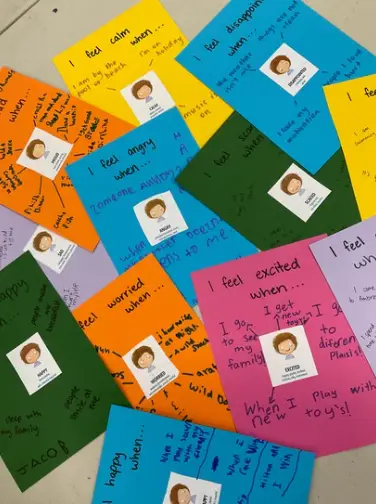
This recognised body safety education program, supported by child protection and education professionals, supports children to develop an age‑appropriate understanding of personal safety, body boundaries, consent and how to seek help from trusted adults. Throughout the year, educators delivered short, structured lessons to build children’s confidence to recognise feelings, identify safe and unsafe situations, and speak up when needed. This initiative strengthens Ambrose’s child‑safe culture and aligns with broader safeguarding practices.
Our policies set out our strong commitment to child safety and wellbeing. They outline the shared responsibility we all have to protect children and ensure safe, supportive environments across our services.
These policies clearly explain the expectations, responsibilities and obligations of all staff, contractors, volunteers and students. They also guide how we meet the National Principles for Child Safe Organisations and comply with the Child Safe Standards in New South Wales.
All team members are required to follow these policies at all times to ensure children feel safe, respected and listened to.
Families can view our policies here
Grounded in the Catholic faith and open to all, our learning communities welcome families from all backgrounds, cultures and faith traditions.
Guided by the values of Respect, Encouragement and Care, educators support children to:
Faith and spirituality are experienced in age-appropriate and meaningful ways through:
Educators nurture children’s natural sense of curiosity, wonder and connection to the world around them while supporting them to grow as caring, thoughtful and respectful individuals.
As part of a Catholic community, children experience opportunities to build connections with:
At Ambrose, transition to school is viewed as a gradual and supportive journey where children build confidence, familiarity and a sense of belonging before their first day of school.
Throughout the year, educators intentionally support children to develop:
Families are supported throughout the transition process through:
At Ambrose, children are part of a connected Catholic school community where relationships, belonging and wellbeing are intentionally nurtured every day.
Grounded in the values of respect, encouragement and care, our nurturing learning environments support children to feel:
Social and emotional learning is embedded throughout the day through:
Through intentional play-based learning, structured routines and shared experiences, children develop:
At Ambrose, mathematical thinking is developed through intentional play-based learning, inquiry, investigation and hands-on learning experiences that encourage children to explore, question and problem solve.
The Ambrose Foundations program supports children’s learning about mathematical concepts and applying them in their play and inquiries including STEAM experiences, construction, investigation and collaborative learning.
Children become familiar with:
Teachers intentionally plan for children’s Mathematical Inquiry and thinking, supporting children to develop:
Strong literacy foundations begin with language, communication and connection. Children develop literacy skills through meaningful, hands-on experiences that connect learning to their everyday lives, interests and the natural world.
As part of the Catholic school community, Ambrose supports literacy development through a seamless continuum of learning from early childhood into kindergarten and the early years of school.
Through intentional play-based learning and literacy experiences, children build the confidence, communication skills and early learning foundations that support a successful transition into school.