
At Ambrose Early Learning, we believe that healthy bodies support curious minds. Nurturing a healthy, active lifestyle from an early age plays a vital role in children’s growth, development, and lifelong wellbeing. That’s why we take a holistic approach to nutrition, health, safety and care, creating an environment where every child can thrive, learn and reach their full potential.
We value and support the principles of Munch & Move and follow the National Healthy Eating Guidelines for Early Childhood Settings. Through everyday experiences, we help children build a positive relationship with food while encouraging healthy choices, movement and active play as part of their daily routine. By exploring new foods, engaging in physical activity and meeting key nutritional needs, children are supported to grow, develop and thrive.

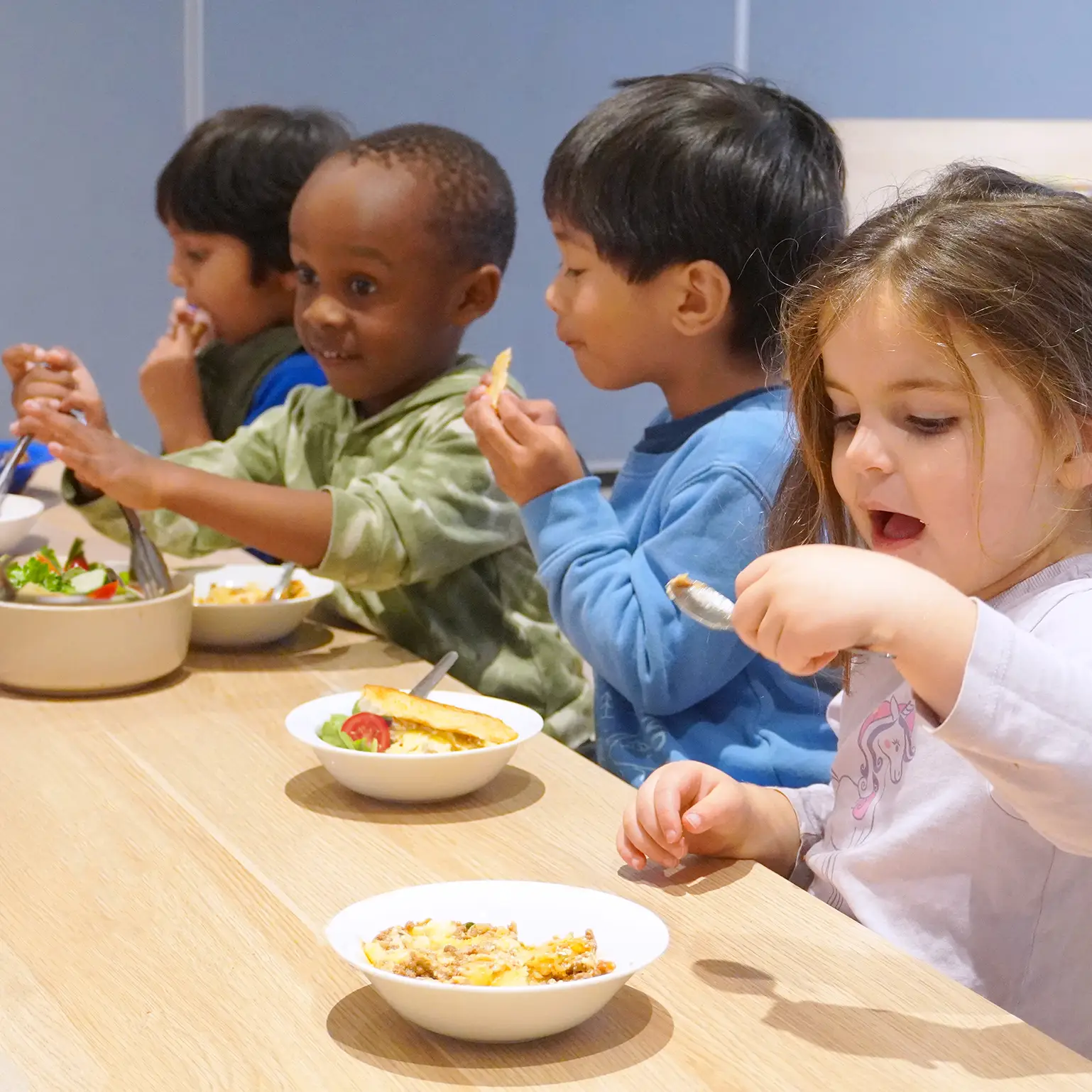
At our extended hours services, children enjoy five freshly prepared meals each day, all cooked on‑site by our dedicated cook. We take pride in creating delicious, nourishing meals that support children’s health through balanced, wholesome ingredients.
Our menus are thoughtfully developed in line with the Australian Healthy Eating Guidelines, providing children with 50% of their recommended daily nutritional intake while in our care. A carefully planned, rotating four‑week menu offers a balanced variety of red meat, white meat and vegetarian options to support healthy growth, development and a positive relationship with food.
Here is an example of what a typical day’s menu looks like at our services.
Cereal: Weetbix, Cherrios, Corn Flakes
Seasonal Fruit and Vegetable Platter: apples, strawberries, pear, kiwifruit, oranges, watermelon, bananas, cherry tomato, celery, carrots, cucumber, broccoli.
Greek Yoghurt
Chicken and Cheesy Spinach Sauce and Pasta: Chicken, onion, carrot, celery, zucchini, garlic, tomato, spinach, cheese, mixed herbs, milk, flour, nutlex, wholemeal pasta.
Alternative: Vegetarian Cheesy Spinach Sauce (Protein: Tofu).
Seasonal Fruit and Vegetable Platter: apples, strawberries, pear, kiwifruit, oranges, watermelon, bananas, cherry tomato, celery, carrots, cucumber, broccoli.
Pizza Scrolls

For families attending our traditional hours services, children bring their own lunchboxes. We actively encourage families to pack healthy, enjoyable meals, as good nutrition plays a key role in children’s energy levels, learning and overall wellbeing throughout the day.
Your child’s safety is our priority. We understand that children with allergies and specific dietary needs require extra care, understanding and thoughtful support. Our educators work closely with families to build strong, trusting relationships and to ensure each child’s food requirements are clearly understood and respected. Where required, we implement individual risk minimisation plans, medical management plans and clear communication strategies to provide a safe, inclusive and supportive environment for every child in our care.
Grounded in the Catholic faith and open to all, our learning communities welcome families from all backgrounds, cultures and faith traditions.
Guided by the values of Respect, Encouragement and Care, educators support children to:
Faith and spirituality are experienced in age-appropriate and meaningful ways through:
Educators nurture children’s natural sense of curiosity, wonder and connection to the world around them while supporting them to grow as caring, thoughtful and respectful individuals.
As part of a Catholic community, children experience opportunities to build connections with:
At Ambrose, transition to school is viewed as a gradual and supportive journey where children build confidence, familiarity and a sense of belonging before their first day of school.
Throughout the year, educators intentionally support children to develop:
Families are supported throughout the transition process through:
At Ambrose, children are part of a connected Catholic school community where relationships, belonging and wellbeing are intentionally nurtured every day.
Grounded in the values of respect, encouragement and care, our nurturing learning environments support children to feel:
Social and emotional learning is embedded throughout the day through:
Through intentional play-based learning, structured routines and shared experiences, children develop:
At Ambrose, mathematical thinking is developed through intentional play-based learning, inquiry, investigation and hands-on learning experiences that encourage children to explore, question and problem solve.
The Ambrose Foundations program supports children’s learning about mathematical concepts and applying them in their play and inquiries including STEAM experiences, construction, investigation and collaborative learning.
Children become familiar with:
Teachers intentionally plan for children’s Mathematical Inquiry and thinking, supporting children to develop:
Strong literacy foundations begin with language, communication and connection. Children develop literacy skills through meaningful, hands-on experiences that connect learning to their everyday lives, interests and the natural world.
As part of the Catholic school community, Ambrose supports literacy development through a seamless continuum of learning from early childhood into kindergarten and the early years of school.
Through intentional play-based learning and literacy experiences, children build the confidence, communication skills and early learning foundations that support a successful transition into school.